Postdoctoral Fellow – Proteomics

Postdoctoral Fellow – Proteomics
Iceland - Reykjavík Apply NowCausal and dynamic modeling of the human plasma proteome for target discovery
This postdoctoral position will focus on understanding the genetic and biological determinants of circulating protein levels and their relationships with human disease. The research will integrate population-scale proteomic, genetic, and phenotypic data using statistical and computational approaches, with the goal of generating biological insights relevant to therapeutic target discovery.
What You Will Do
This postdoctoral position will focus on understanding the genetic and biological determinants of circulating protein levels and their relationships with human disease. The research will integrate population-scale proteomic, genetic, and phenotypic data using statistical and computational approaches, with the goal of generating biological insights relevant to therapeutic target discovery.
The project will leverage unique large-scale proteomics resources at Amgen deCODE genetics, including longitudinal measurements and complementary genomic and multi-omic data. The fellow will develop and apply analytical approaches for causal inference, investigate the genetic regulation of circulating proteins, and study how protein levels change during disease development.
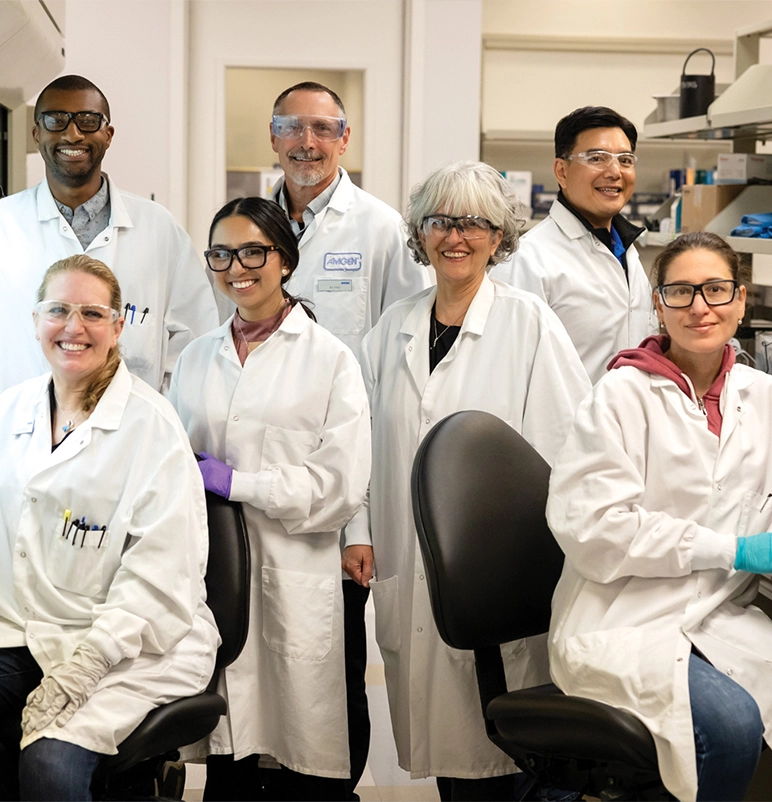
The fellow will be a member of the proteomics team at Amgen deCODE genetics, pursuing independent research while collaborating with scientists across human genetics, statistics, bioinformatics, artificial intelligence, disease biology, and therapeutic discovery.
Key Responsibilities include:
Conduct independent research integrating large-scale human proteomic, genetic, and phenotypic data.
Develop and apply statistical and computational approaches for causal inference, longitudinal proteomics, and multi-omic data integration.
Identify disease-associated proteins, investigate their biological regulation, and prioritize potential therapeutic targets.
Collaborate with multidisciplinary scientists across Amgen deCODE genetics and Amgen Research.
Present scientific findings at internal and external scientific forums and publish results in peer-reviewed journals.
This is a four-year fellowship within the Amgen Research & Development Postdoctoral Program, designed to provide advanced scientific training and career development opportunities for outstanding early-career researchers.
What We Expect of You
The Postdoctoral Fellow we seek is a computational scientist with the following qualifications:
Basic Qualifications
Doctorate degree (PhD) completed prior to the start date in Statistics, Statistical Genetics, Bioinformatics, Computational Biology, Data Science, or a related quantitative or biomedical discipline.
Preferred Qualifications
Strong record of scientific achievement demonstrated through peer-reviewed publications and presentations.
Expertise in statistical genetics, bioinformatics, computational biology, proteomics, or a related quantitative field.
Experience analyzing large-scale human genetic, proteomic, or other high-dimensional biomedical datasets.
Familiarity with genome-wide association studies, quantitative trait locus analysis, Mendelian Randomization, or related statistical genetic methods is desirable.
Strong programming skills in R, Python, or similar languages; experience with Linux and high-performance computing is desirable.
Strong written and verbal communication skills and ability to work effectively in a collaborative, multidisciplinary research environment.
What You Can Expect From Us
The Amgen Research & Development Postdoctoral Program provides an environment for fellows to pursue independent scientific research while receiving mentorship and training from scientists across multiple disciplines. Fellows are encouraged to develop original research ideas, lead peer-reviewed publications, and present their work at scientific conferences and internal research forums.
At Amgen deCODE genetics, the fellow will join a collaborative scientific community with extensive expertise in population-scale human genetics, proteomics, statistics, and computational biology. The research environment provides access to large-scale proteomic, genomic, phenotypic, and multi-omic datasets and established computational infrastructure.
The fellowship is designed to provide both advanced scientific training and opportunities for professional development, preparing fellows for future careers in academia, biotechnology, or the pharmaceutical industry.